

My Cottage Basement Is Flooded — How To Remove The Water And Restore It Back To Normal
By: 911 Water Damage Experts
Nothing ruins a peaceful cottage weekend faster than walking downstairs and finding your basement underwater. Whether it’s from a heavy spring rain, a broken sump pump, or melting snow, a flooded basement is stressful — but fixable. Acting quickly is the key to preventing costly long-term damage and mould growth.
In Canada, basement floods are becoming increasingly common. According to the Insurance Bureau of Canada, water damage now accounts for nearly 50% of all home insurance claims nationwide. That means knowing what to do immediately can save you thousands of dollars and a lot of headaches.
Let’s walk through how to remove the water, clean safely, and restore your cottage basement back to normal.
Understanding Why Cottage Basements Flood
Cottages face unique flooding risks. Many are built near lakes, on sloped terrain, or with older foundations that don’t have modern waterproofing. Common causes include:
-
Heavy rainfall or snowmelt that overwhelms drainage systems.
-
Sump pump failures due to power outages.
-
Cracks in foundations allowing groundwater seepage.
-
Blocked gutters and downspouts that cause pooling around the cottage.
-
Improper grading where the land slopes toward the foundation.
In regions like Muskoka or the Kawarthas, fluctuating water tables and freeze-thaw cycles make basements even more vulnerable.
Safety First Before Entering A Flooded Basement
Before you step into the water, make sure it’s safe.
-
Turn off power at the breaker — water and electricity are a deadly mix.
-
Wear protective gear like rubber boots, gloves, and a mask.
-
Avoid contaminated water. Floodwater often contains bacteria, sewage, and chemicals.
-
Call professionals if you suspect structural damage or sewage backup.
If the water level is high enough to reach outlets, do not enter — wait for emergency help or a certified restoration team.
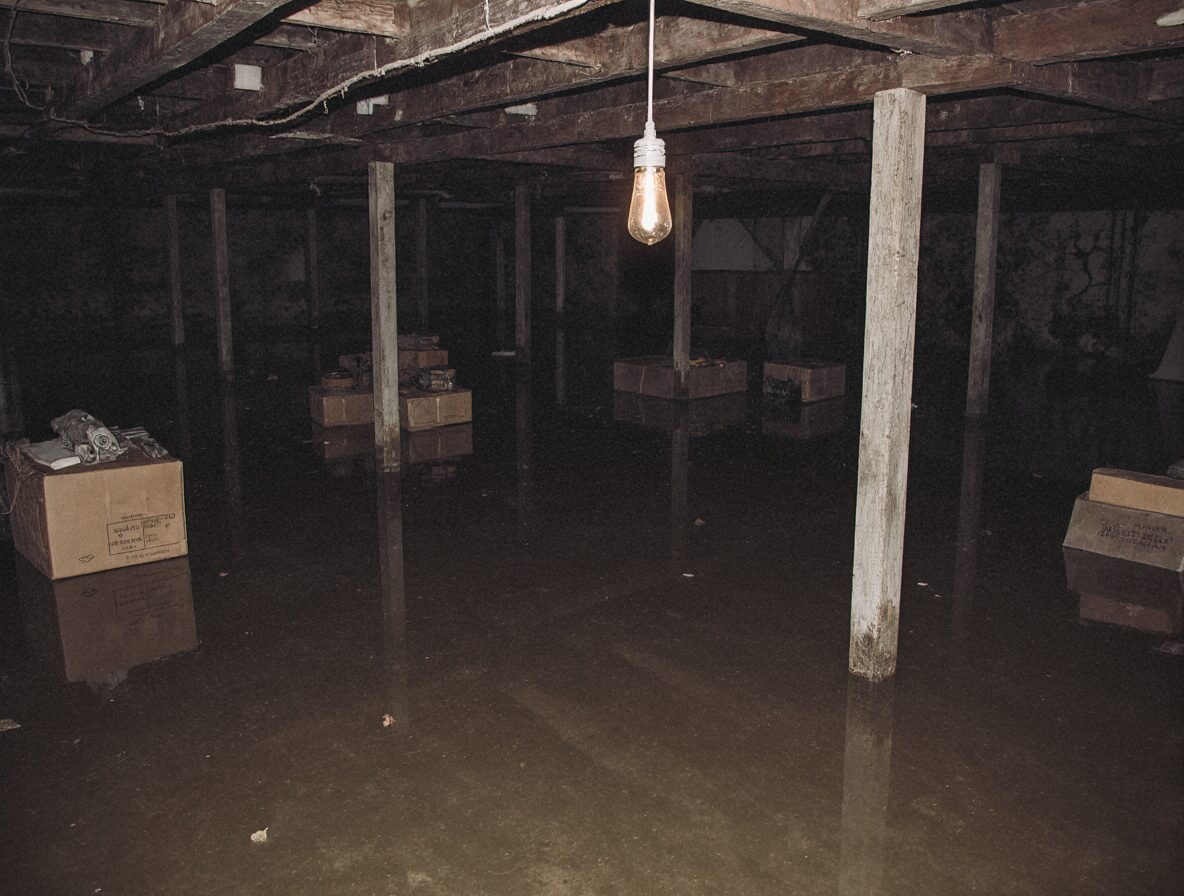
How To Remove The Water From Your Basement
For light flooding, you can often remove the water yourself:
-
Use buckets, mops, or a wet/dry vacuum for shallow water.
-
For deeper water, use a sump pump or submersible pump.
-
Dispose of contaminated water outdoors or into a sanitary drain if permitted.
If the water depth exceeds 15–20 cm, or if it’s contaminated, hire a professional water extraction company. Mould can start forming within 24 to 48 hours, so quick action is essential.
Drying Out The Basement
Once the standing water is gone, the drying process begins:
-
Open windows and doors if humidity is low outside.
-
Set up industrial fans and LGR dehumidifiers to circulate air and remove moisture.
-
Remove soaked materials like drywall, insulation, and carpet padding.
-
Use a hygrometer to monitor humidity levels — aim for below 50%.
Drying can take anywhere from 3 to 7 days, depending on how saturated the materials are and the temperature of the space.
Cleaning And Sanitizing After Water Removal
When everything looks dry, it’s time to clean:
-
Scrub all hard surfaces with warm, soapy water.
-
Use one cup of household bleach per gallon of water to disinfect non-porous surfaces (avoid mixing with ammonia).
-
Wash any salvageable clothing or linens with hot water.
-
Dispose of any items that absorbed contaminated water, including insulation, drywall, and carpet.
This helps prevent bacteria and mould from taking hold.
Preventing Mould Growth After A Flood
Mould can begin forming within just 24 hours of water exposure.
-
Keep running dehumidifiers and fans for several days.
-
Clean surfaces with antimicrobial solutions.
-
For larger infestations, call a certified mould remediation specialist.
Health Canada warns that prolonged mould exposure can lead to respiratory irritation, asthma, and allergic reactions — especially in children and older adults.
Restoring Your Basement To Normal
Once dry and disinfected, it’s time to rebuild:
-
Replace damaged drywall, flooring, and insulation.
-
Check your electrical system and appliances for damage.
-
Seal foundation cracks with waterproof epoxy.
-
Add a sump pump alarm or backup battery to prevent future failures.
-
Consider waterproof coatings on basement walls.
If you file an insurance claim, take photos and videos of all damage before starting restoration work.
Long-Term Prevention Tips For Cottage Owners
-
Keep gutters clean and extend downspouts at least 2–3 metres from the foundation.
-
Slope soil away from the cottage.
-
Inspect and service sump pumps annually.
-
Install water leak sensors and automatic shutoff valves.
-
Check the foundation after spring thaw or major rainfall.
A bit of maintenance can save thousands in future repairs.
The Role Of Professional Restoration Companies
Professional restoration teams use specialized tools like:
-
High-volume pumps to remove standing water fast.
-
HEPA air scrubbers to improve air quality.
-
Infrared cameras to detect hidden moisture in walls and floors.
-
Dehumidifiers and air movers to restore humidity balance.
Certified companies follow IICRC standards, ensuring safety, cleanliness, and insurance compliance.
Conclusion
A flooded basement is every cottage owner’s nightmare, but it doesn’t have to be a disaster. Acting fast, prioritizing safety, and drying thoroughly are key to preventing long-term damage.
Whether it’s a small leak or a full flood, restoration professionals can bring your basement — and your peace of mind — back to normal.
Related Posts
Fire Damage Restoration Articles
The Dos And Don’ts Of Commercial Fire Damage
Forest Fire House Damage: What To Do After Your House Is Damaged By A Forest Fire And Who to Call?
Fire prevention tips for the summer
How to clean up after a house fire
Fire damage restoration checklist
Fire damage tips: 6 hazards property owners miss
How smoke from fires can negatively affect your health
What are the most common causes of house fires?
10 helpful smoke damage cleaning tips
Mould Removal Restoration Articles
Is Bathroom Mould Dangerous? Powerful Mould Prevention Tips Inside
Dangers Of Bathroom Mould And Tips On How To Clean And Prevent It
Got Bathroom Mould? Here Are Some Must-Know Bathroom Mould Cleaning Tips
5 Signs You Have Mould Growing In Your Walls
“Can I Remove Mould Myself?” Our Mould Removal Experts Have Answers
7 Must-Know Reasons Why You Should Get A Mould Inspection Before Buying A House
Does Mould Attract Bugs? Yes And Here’s What Kind And Why
How To Remove Mould From The Attic [Mould Prevention Tips Inside]
How Rain Causes Mould Growth-Prevention Tips Included
Must-Know Tips: How To Remove Mould In Your Basement
Water Damage Restoration Articles
How to prevent home storm damage
What you can expect from a fire damage restoration company
Water damage prevention tips from the most common problems we’ve seen
Top causes of water damage in commercial buildings and how to find them
Must-know water damage tips: What to do after your house floods
What does good water damage restoration look like?
DIY water damage restoration and the hidden dangers
How to choose the right water damage company
Flast floods: What to do before, during and after a flash flood
What to do when your attic leaks?
This is why water damage is a silent home killer
Related Water Damage Services
Fire damage restoration services
Water damage restoration services
Emergency cleanup services
Mould removal services
Weather damage services