
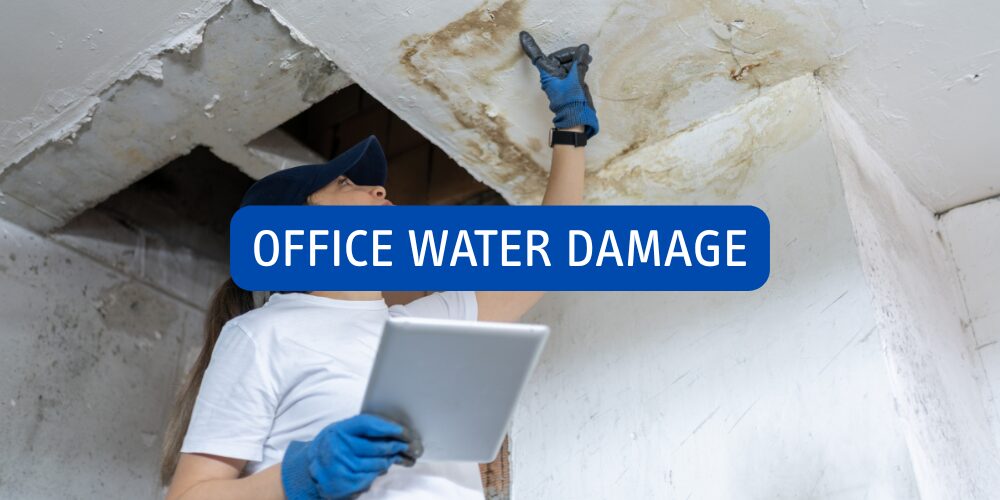
My Office Has Water Damage, What Do I Do And Who Do I Call?
Water damage in an office isn’t just inconvenient — it can bring operations to a standstill, cause thousands of dollars in losses, and create health and safety hazards for your staff.
Whether it’s a burst pipe, a leaky roof, or a major flood, knowing what to do (and who to call) can make all the difference. In this guide, we’ll walk through immediate steps, professional restoration processes, and long-term prevention tips to help your business recover quickly and safely.
According to the Institute of Inspection, Cleaning and Restoration Certification (IICRC), acting within the first 24 to 48 hours after water intrusion can save up to 40% in restoration costs — and potentially your business itself.
Understanding Office Water Damage
Office buildings are complex structures with extensive plumbing, HVAC systems, and shared utilities — meaning water can spread quickly and cause extensive damage.
Common types of office water damage include:
-
Burst or leaking pipes
-
Roof and window leaks
-
Sewage backups
-
HVAC condensation issues
-
Flooding from storms or melting snow
-
Malfunctioning sprinkler systems
The Insurance Bureau of Canada (IBC) reports that water damage now accounts for nearly 50% of all property insurance claims, making it one of the costliest and most common commercial building issues.
Water damage typically falls into three categories:
-
Clean Water: From broken water lines or rain; minimal risk if addressed quickly.
-
Grey Water: Contaminated from appliances or sump pumps; requires sanitization.
-
Black Water: From sewage or floodwaters; highly hazardous and requires professional remediation.
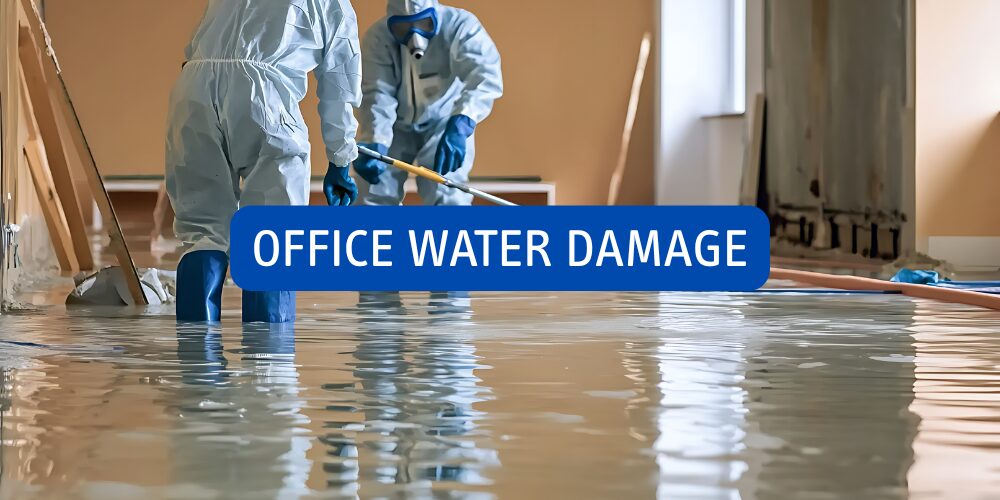
Immediate Steps To Take When You Discover Water Damage
When disaster strikes, time is your biggest ally. Here’s what to do right away:
Ensure Safety First
If water levels are high or near electrical outlets, shut off the power and evacuate immediately. Never walk through standing water that may conceal hazards.
Stop The Source
If possible, locate and shut off the main water supply. For larger commercial buildings, contact building maintenance or facility management right away.
Document Everything
Take photos and videos before cleanup begins. This visual evidence will help with insurance claims and provide proof of damage for reimbursement.
Move Equipment And Assets
Unplug electronics and relocate them to a dry area. Protect sensitive files, servers, and office furniture from further exposure.
Call The Professionals
Contact a 24/7 water damage restoration company immediately. They have industrial-grade equipment for water extraction, drying, and dehumidification.
Who To Call First
When your office suffers water damage, coordination is key. Here’s who to contact and in what order:
-
Professional Restoration Company: Your first and fastest call. Certified professionals can assess, extract, dry, and restore safely.
-
Building Management: They can authorize repairs and provide access to water mains or restricted areas.
-
Insurance Provider: Report the claim within 24 hours to prevent delays. Document the incident and provide estimates.
-
Plumber: If a broken pipe or internal leak caused the damage, a plumber will be needed to repair the source.
-
Electrician or HVAC Technician: Water exposure in electrical or duct systems requires immediate inspection.
The faster you coordinate these professionals, the sooner your office can return to normal operations.
The Importance Of Acting Fast
Water doesn’t wait — and neither should you. Within hours, moisture begins seeping into flooring, drywall, and furniture. Within a day, mould spores start multiplying.
According to Health Canada, mould can begin forming within 24–48 hours in moist environments. Left untreated, this can lead to respiratory irritation, allergic reactions, and long-term damage to your building materials.
Beyond health concerns, delays can double your restoration costs. The longer moisture sits, the deeper it penetrates and the more structural components must be replaced instead of restored.
Professional Water Damage Restoration Process
Professional restoration companies follow a structured and proven approach to ensure your office is fully dry, sanitised, and safe to reoccupy.
Inspection And Assessment
Technicians use moisture meters and thermal imaging to detect hidden water pockets. They classify the damage and determine the best course of action.
Water Extraction
Industrial pumps and vacuums remove standing water quickly to prevent secondary damage.
Drying And Dehumidification
High-powered air movers and HEPA dehumidifiers remove moisture from walls, floors, and air.
Cleaning And Sanitising
Surfaces are disinfected to prevent mould growth and eliminate odours. Offices require extra care to ensure shared spaces like kitchens and restrooms are fully sanitised.
Restoration And Repairs
Depending on severity, this may include drywall repair, repainting, replacing carpets, or restoring damaged electrical systems.
The Federal Emergency Management Agency (FEMA) reports that 80% of businesses affected by severe flooding close for at least one week, and 25% never fully recover. Professional restoration minimizes this downtime and protects your business continuity.
Common Causes Of Office Water Damage
Understanding the root causes helps prevent future disasters. The most common triggers include:
-
Burst or frozen pipes (common in Canadian winters)
-
Roof leaks and faulty flashing
-
HVAC system condensation or drain line failures
-
Fire sprinkler malfunctions
-
Heavy rainfall or melting snow infiltration
-
Leaky coffee machines, dishwashers, or water coolers
-
Backed-up floor drains or sewer lines
Regular maintenance and seasonal inspections can catch small leaks before they become full-blown emergencies.
The Hidden Costs Of Office Water Damage
Beyond physical damage, water intrusion creates ripple effects that affect your bottom line:
-
Operational Downtime: Employees may have to relocate or stop working.
-
Lost Productivity: Downtime directly impacts project delivery and revenue.
-
Equipment Damage: Computers, printers, and electronics are highly vulnerable.
-
Data Loss: Servers or files may be destroyed if not backed up offsite.
-
Air Quality Issues: Lingering moisture encourages mould and bacteria growth.
-
Insurance Rate Increases: Repeated claims may raise premiums.
For small and mid-sized businesses, these costs can be devastating without a proper restoration plan.
How To Choose The Right Commercial Restoration Company
Not all restoration companies are equal — and choosing the right partner determines how fast and safely you recover.
Certifications
Look for IICRC-certified technicians with experience in commercial environments.
Experience
Ask about previous office or retail projects and request references.
Response Time
Choose a company that offers 24/7 emergency service with a guaranteed on-site response within 60–90 minutes.
Insurance Support
Reputable companies will work directly with your insurer and provide detailed documentation.
Comprehensive Services
Ensure they can handle water extraction, structural drying, repairs, and mould remediation.
Preventing Future Office Water Damage
Once your office has been restored, prevention is your best investment.
-
Schedule routine inspections for plumbing, HVAC, and roofing.
-
Install leak detection sensors in mechanical rooms and under sinks.
-
Seal windows, walls, and foundation cracks to prevent seepage.
-
Maintain indoor humidity below 50% with dehumidifiers.
-
Store electronic equipment and documents off the floor.
-
Create an emergency plan and train staff on how to shut off water and power.
Conclusion
Water damage in an office can feel overwhelming, but fast, informed action makes all the difference.
By securing safety first, documenting everything, and calling certified professionals right away, you can save your business time, money, and stress. Preventative maintenance and early leak detection will also help ensure your office stays dry and operational for years to come.
If you’re currently dealing with an office flood or leak, don’t delay — call a trusted Canadian water damage restoration company for 24/7 emergency assistance.
FAQs About Office Water Damage
Can I Handle Office Water Damage Cleanup Myself?
Small spills can be managed internally, but any significant leak, flood, or sewage issue requires professional remediation to prevent hidden mould and structural damage.
Is Water Damage Covered By Commercial Insurance?
In most cases, yes — if it’s sudden and accidental (like a burst pipe). Damage from neglected maintenance or long-term leaks is typically excluded.
How Long Does Commercial Water Damage Restoration Take?
Minor incidents may take 2–3 days, while large-scale drying and repair projects can last a week or more, depending on the extent of saturation.
What Should I Do If Mould Starts Growing After A Flood?
Contact a mould remediation specialist immediately. Mould can spread quickly and compromise indoor air quality within 48 hours of moisture exposure.
Can Employees Stay In The Building During Restoration?
If the affected area is isolated and safe, operations can sometimes continue. For major floods or contamination, temporary relocation may be necessary.
Who Coordinates With The Insurance Company?
Most professional restoration companies handle communication and documentation directly with your insurance provider to streamline claims.
What Is The Most Common Cause Of Office Floods In Canada?
Burst pipes during winter are the leading cause, followed by roof leaks and backed-up floor drains during heavy rain.
How Much Does Commercial Water Damage Restoration Cost?
Average costs range from $3,000 to $15,000 depending on the size of the affected area and the level of contamination.
Can Water Damage Affect Electrical Systems?
Yes — water exposure to wiring, outlets, or fixtures can pose fire and electrocution risks. Always have a licensed electrician inspect before power restoration.
How Can I Prevent Water Damage In The Future?
Regular maintenance, leak detection devices, staff training, and professional inspections are the best defences against recurring water damage.