
What To Do When Your Water Heater Leaks
By: 911 Water Damage Experts
A leaking water heater can soak your floors, spawn mould, and inflate your utility bills in no time. Independent insurance studies show that the average clean‑up and repair bill can climb into the several‑thousand‑dollar range, and insurers now insist on prompt maintenance to keep those costs under control.
Let’s get right into it!
Recognising The Early Signs Of A Water Heater Leak
Damp Spots, Puddles, Or Moisture Around The Base
Even small beads of water are a red flag. Moisture that appears only after a shower often points to an intermittent leak at the supply line or drain valve, and a quick blot test can reveal a persistent weep.
Unusual Hissing Or Dripping Sounds
A healthy appliance runs almost silently. Hissing usually means steam or high‑pressure water is escaping, while a rhythmic drip suggests a loose fitting that deserves immediate attention.
Fluctuating Water Temperature Or Pressure
When sediment builds up, it insulates the thermostat and forces the burner or element to over‑compensate. That stop‑and‑go cycle strains gaskets and threaded joints, making leaks more likely.
Rust‑Coloured Water Or Metallic Odour
Discoloured hot water indicates internal corrosion. Once rust starts gnawing at the steel liner, a leak is only a matter of time.
Immediate Safety Steps You Must Take
Shut Off The Power Or Gas Supply Safely
Flip the dedicated breaker for an electric heater or twist the gas shut‑off valve to the off position. Removing energy prevents the unit from dry‑firing when the tank empties and reduces the risk of fire.
Close The Cold‑Water Inlet Valve
Cutting incoming flow halts most leaks on the spot and limits additional flooding. The valve is usually located on the cold‑water line just above the tank.
Drain Excess Water To Reduce Pressure
Attach a garden hose to the drain spigot and route it to a floor drain or outside. Open a nearby hot‑water tap to break the vacuum and let water exit freely.
Protect Belongings And Flooring From Further Damage
Move boxes, furniture, and electronics away from the leak. Lay towels or use a wet‑dry vacuum to keep standing water from seeping into sub‑floors.
Pinpointing The Source Of The Leak
Temperature And Pressure Relief Valve Issues
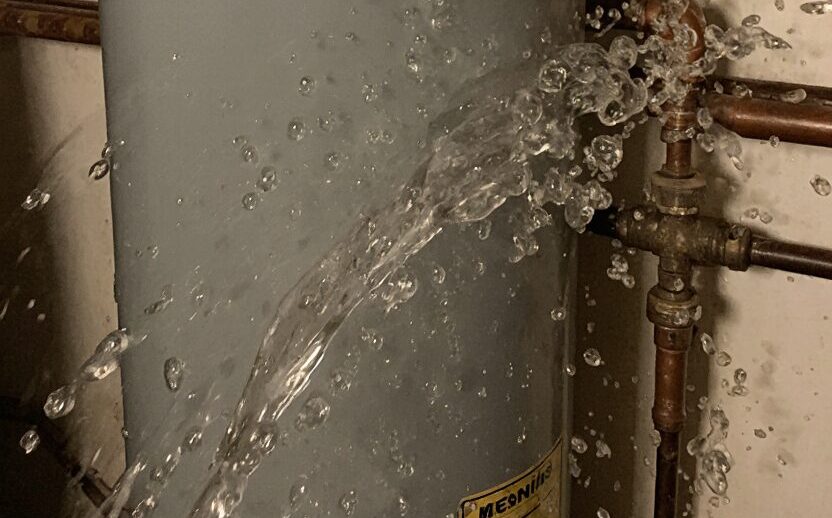
The T‑P valve is designed to vent when the tank reaches extreme temperature or pressure levels. Debris can prevent it from reseating, causing a constant trickle that often disappears once the valve is replaced.
Loose Inlet Or Outlet Connections
Over time, vibration and thermal cycling loosen threaded joints. Apply fresh thread sealant and tighten using two wrenches—one to hold the pipe, one to turn the fitting—to avoid twisting the tank nipple.
Corrosion Of The Tank Or Fittings
If rust blooms around the seam or under insulating foam, the steel liner has failed. At that stage, a full replacement is the only safe solution because internal pressure will continue to force water through new holes.
Condensation Versus An Actual Leak
Cold groundwater entering a warm basement can create harmless condensation on the tank shell. Wipe the surface dry and observe. If moisture quickly reforms in rivulets rather than a uniform mist, you are likely dealing with a true leak.
Repair, Replacement, And Preventative Maintenance
Tightening Fittings And Replacing Worn Washers
Many slow leaks originate at the drain valve or element gasket. Swapping inexpensive rubber washers and applying even torque can stop the seep and restore full pressure.
Flushing Sediment To Extend Tank Life
Open the drain valve twice each year to flush out mineral deposits. The practice improves efficiency and reduces the heat stress that leads to leaks.
When A Patch Kit Makes Sense—And When It Does Not
Epoxy patch kits can seal small pin‑hole leaks on the shell, but they are temporary at best. Use them only to buy time until a new unit arrives or professional service can be scheduled.
Estimating Labour And Part Costs In Canadian Markets
Expect to pay a modest fee, typically in the low hundreds, for a standard element or valve replacement. A full tank installation can run into the low‑to‑mid‑thousands, with remote regions seeing higher totals due to travel surcharges.
FAQ
1. Why Is My Water Heater Leaking From The Bottom?
Leaks at the bottom usually involve the drain valve or internal corrosion that has breached the steel liner. Inspect the valve first; if the shell is rusty, replacement is inevitable.
2. Is It Safe To Keep Using A Leaking Water Heater?
No. Even a small leak can escalate into a catastrophic rupture, releasing a significant volume of hot water in minutes and posing electrical and scald hazards.
3. Can I Repair A Leaking Pressure Relief Valve Myself?
Yes, if you are comfortable with plumbing work. Shut off power and water, drain a portion of the tank, and screw in a new Canadian Standards Association‑approved T‑P valve. If the new valve also leaks, call a licensed plumber because the tank may be over‑pressurised.
4. How Much Will A Replacement Cost In Canada?
A mid‑efficiency electric tank is generally priced in the low‑to‑mid‑thousands installed, while a high‑efficiency natural‑gas model can cost several thousand more once venting upgrades are included.
5. What Tools Do I Need For Minor Repairs?
You will need two adjustable wrenches, a garden hose, thread seal tape, and possibly a screwdriver set to remove access panels.
6. How Quickly Can Mould Form After A Leak?
Health Canada warns that mould can begin growing on damp materials in as little as a couple of days, so fast drying is essential.
7. Does Insurance Cover Damage From Water Heater Leaks?
Most standard homeowner policies cover sudden and accidental water damage, but not gradual leaks caused by neglected maintenance. Confirm coverage details with your broker.
8. How Can I Prevent Sediment Build‑Up In The Tank?
Install a whole‑home sediment filter and flush the tank twice yearly to remove mineral deposits and reduce heat stress.
9. When Should I Call A Licensed Plumber?
Call immediately if water sprays forcefully, if the T‑P valve fails more than once, or if you see rust streaks on the shell.
10. Will A Leak Reduce My Water Heater’s Efficiency?
Yes. Heat loss through escaping water forces the elements or burner to run longer, driving up energy costs.
Conclusion
A leaking water heater can devastate floors, cupboards, and even the structural framing beneath. By recognising early warning signs, acting quickly to isolate the unit, and deciding promptly between repair and replacement, you protect both your home and your wallet. Regular flushing and annual inspections remain the most cost‑effective ways to extend the lifespan of this essential appliance.
If you have any questions about water damage and water damage restoration feel free to call us at 1-833-WE-DRY-IT or chat with us in near real-time on our Facebook fan page.